
CWRM · Continuously Welded Rail Monitor
See how rail force changes with temperature and time
CWRM measures longitudinal force and temperature at instrumented rail locations and brings the information together for track-management and maintenance decisions. Review trends, exceptions and equipment status across distributed sites.
The system calculates stress-free temperature (SFT), also known as rail-neutral temperature (RNT), from calibrated rail-force and temperature measurements. Measurement locations, configuration and reporting are defined around the railway and the decisions the information needs to support.
Measurement to decision
Follow the rail from field measurement to decision
Measure at the rail
Retrofitted sensors measure longitudinal rail force and temperature without rail cutting or sleeper replacement.
Collect and communicate
Track Processors communicate to a Field Processor, or a combined wired processor serves wired sites. Cellular service or country-approved radio to a High Site connects the field to central reporting.
Process and present
Review line and station status, time-based trends, exceptions and equipment-health information in OTT’s central reporting environment.
Support engineering decisions
Combine current conditions, historical trends and forecast scenarios to inform inspection, maintenance and track management.
CWRM provides decision-support information and does not replace the railway owner’s engineering standards, inspection responsibilities or operational controls.
Operator views
Move from line overview to site detail
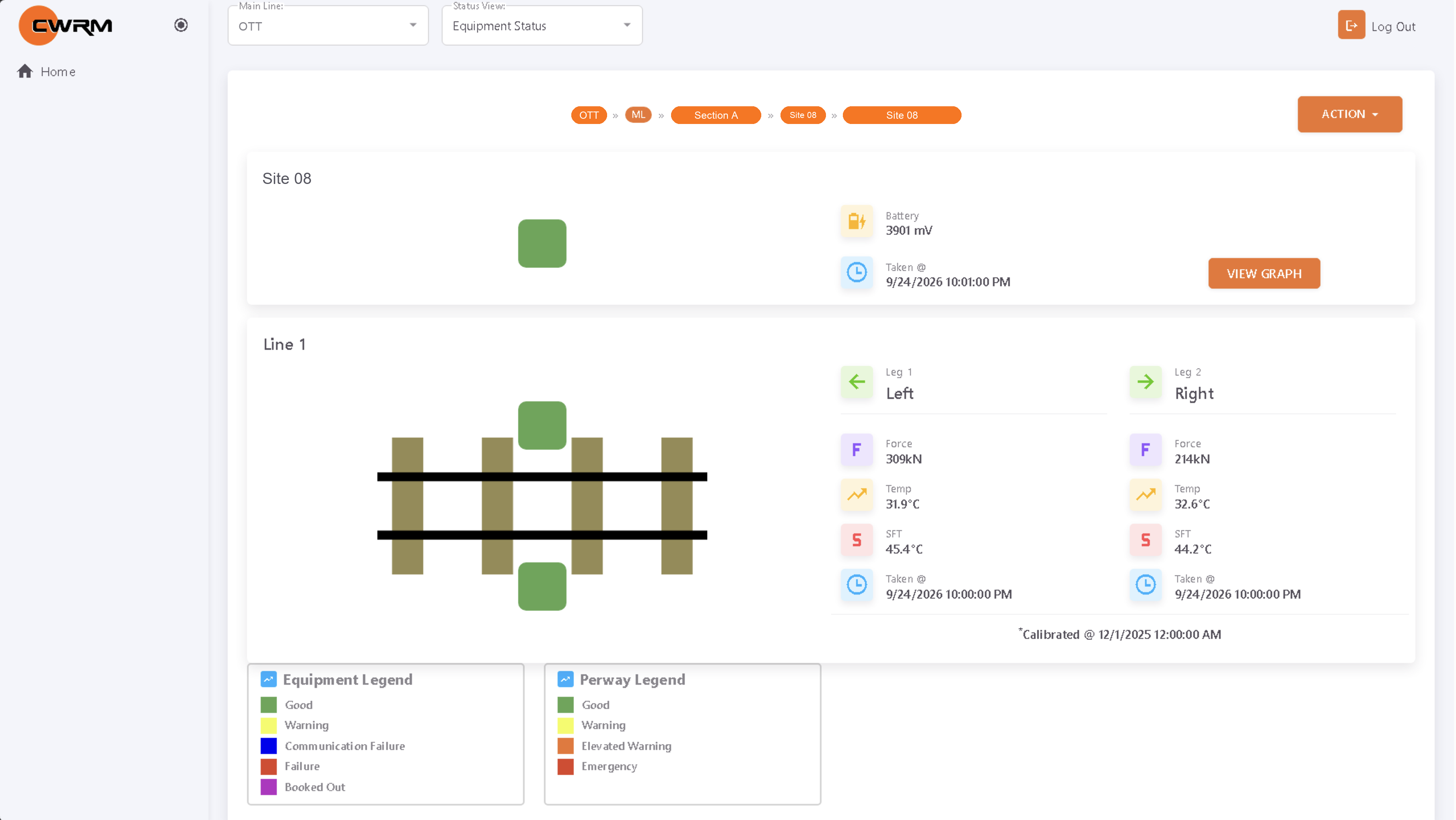
The web interface provides a line-level view of instrumented locations, using status indicators to help identify where attention may be required. Move into an individual site to review measurements and equipment information.
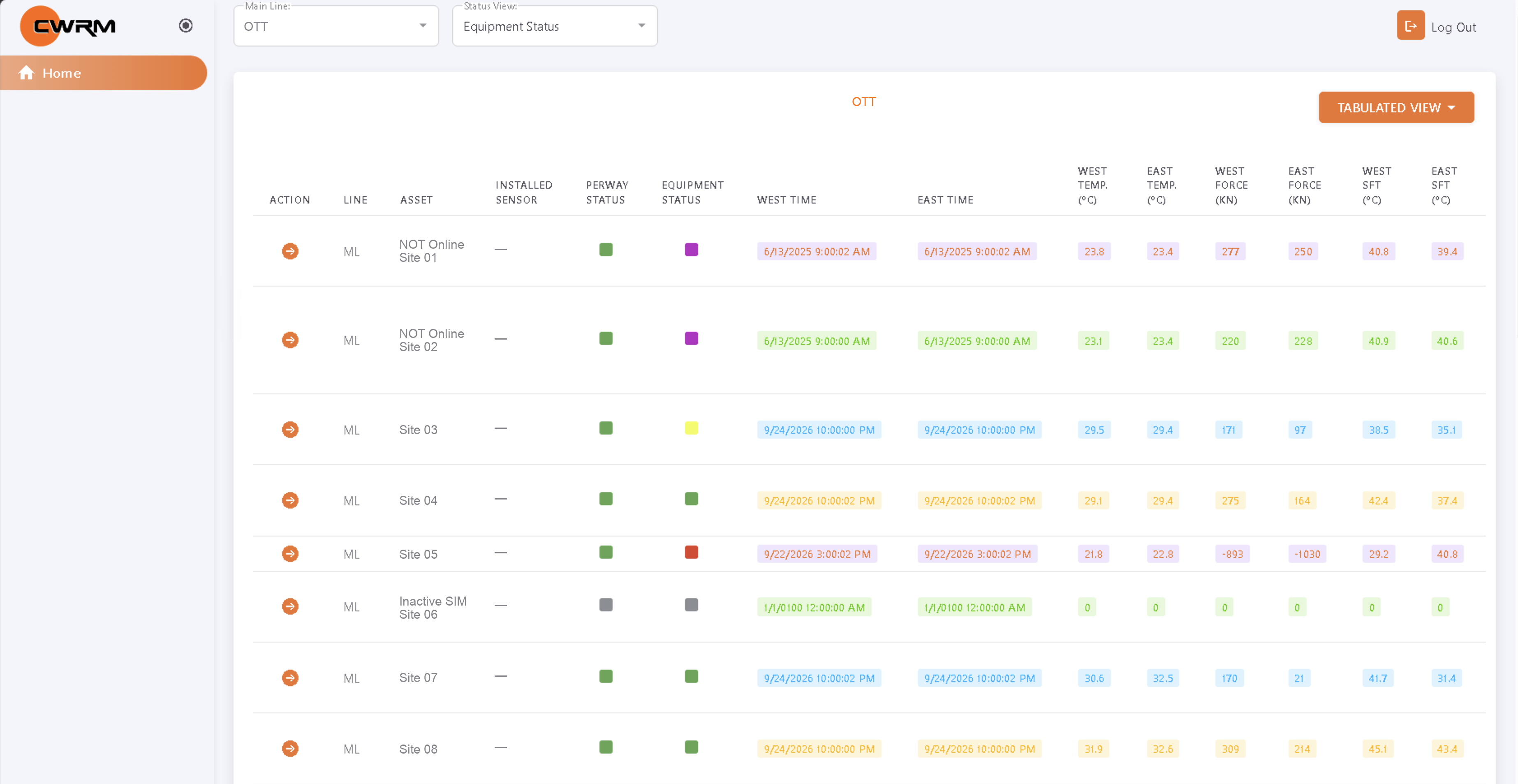
Available views can include rail force, temperature, calculated SFT/RNT information and equipment status such as battery level and communications signal. Role-specific presentation helps track and signalling teams focus on the information relevant to their responsibilities.
Trends and forecasting
Use trends to add context to a measurement
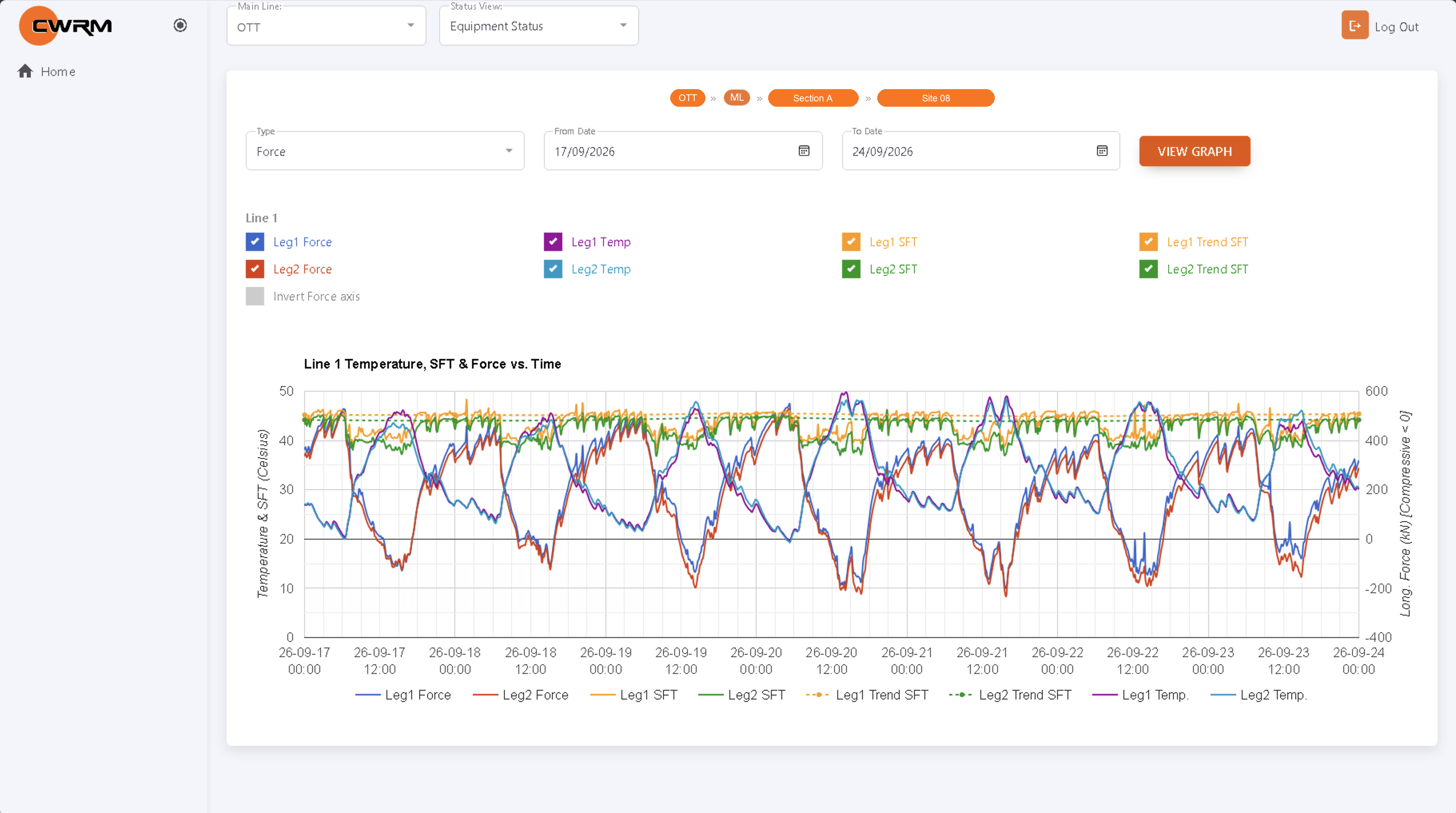
Examine how rail force and temperature change over selected periods. Review calculated SFT/RNT and equipment-health trends alongside field measurements, and export available data for further analysis. Historical context helps users investigate exceptions, compare locations and plan follow-up.
Explore forecast conditions
The forecasting module allows a user to enter an air-temperature range and forecast the track forces and SFT/RNT behaviour likely under those conditions. This provides a structured way to explore what-if scenarios and consider how the monitored railway may respond.
Forecast results support engineering assessment and are not a guarantee of future field conditions.
Reporting
Focus reporting on conditions that need attention
Scheduled reporting can distribute exception information at agreed times, including around shift or work-period starts. Reports organise exceptions by parameter, severity and location to support prioritised review.
We agree recipients, report configuration and distribution schedules for the application. An exception is information for assessment, not an automatic diagnosis or instruction to take a particular operational action.
Field configuration
Connect remote and distributed locations
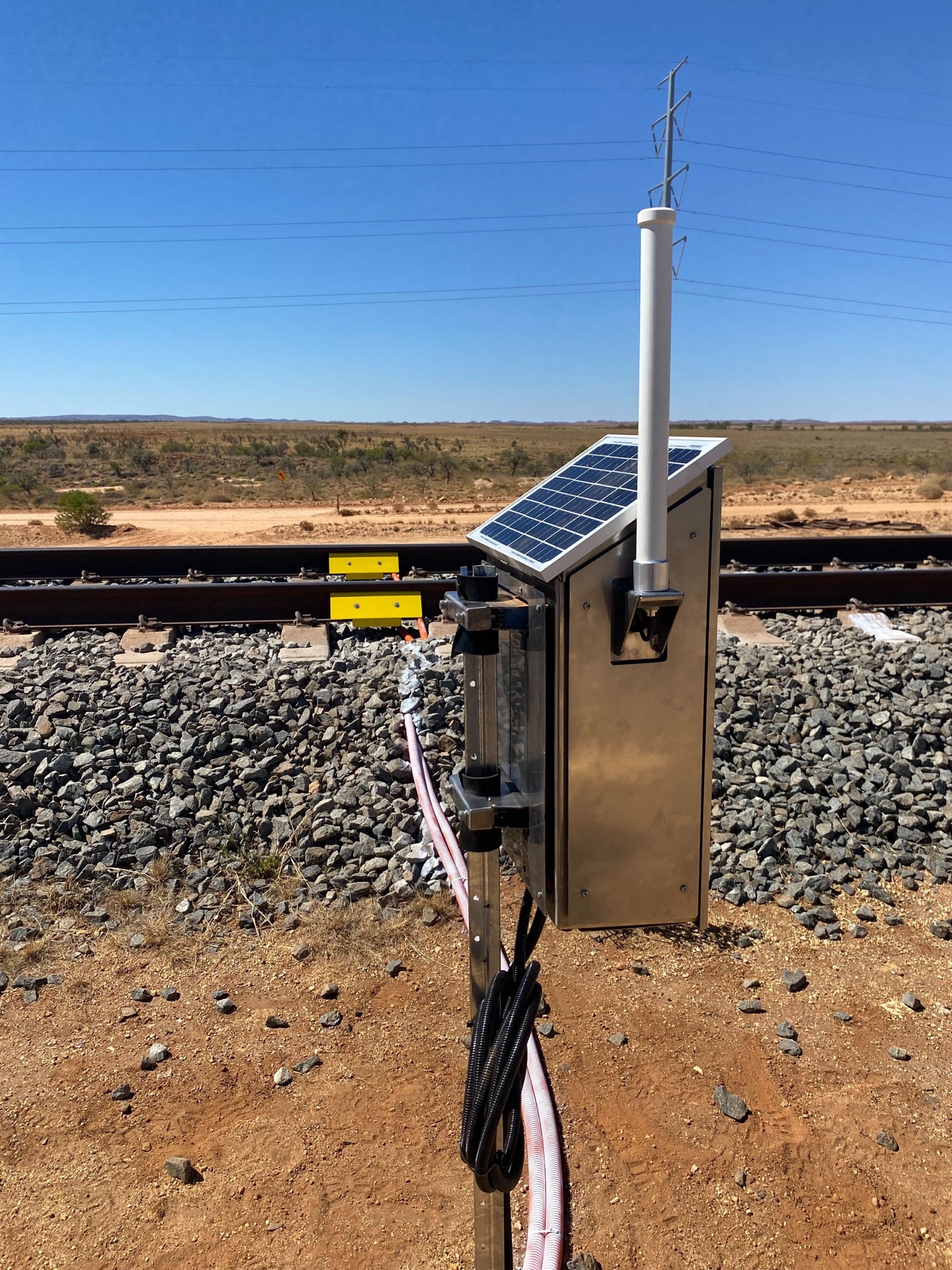
CWRM supports wireless and wired field configurations. A Field Processor can serve multiple instrumented rail legs, while additional processors extend larger or multi-line applications.
Solar-powered Field Processors and battery-powered Track Processors can reduce dependence on local infrastructure. A plug-in cellular module is selected for the available network. Where direct cellular service is unavailable, country-approved long-range radio can relay data to a High Site with cellular connectivity.
Configuration depends on line layout, coverage, terrain, communications, access and maintenance requirements.
Retrofit installation
Add monitoring without rebuilding the track
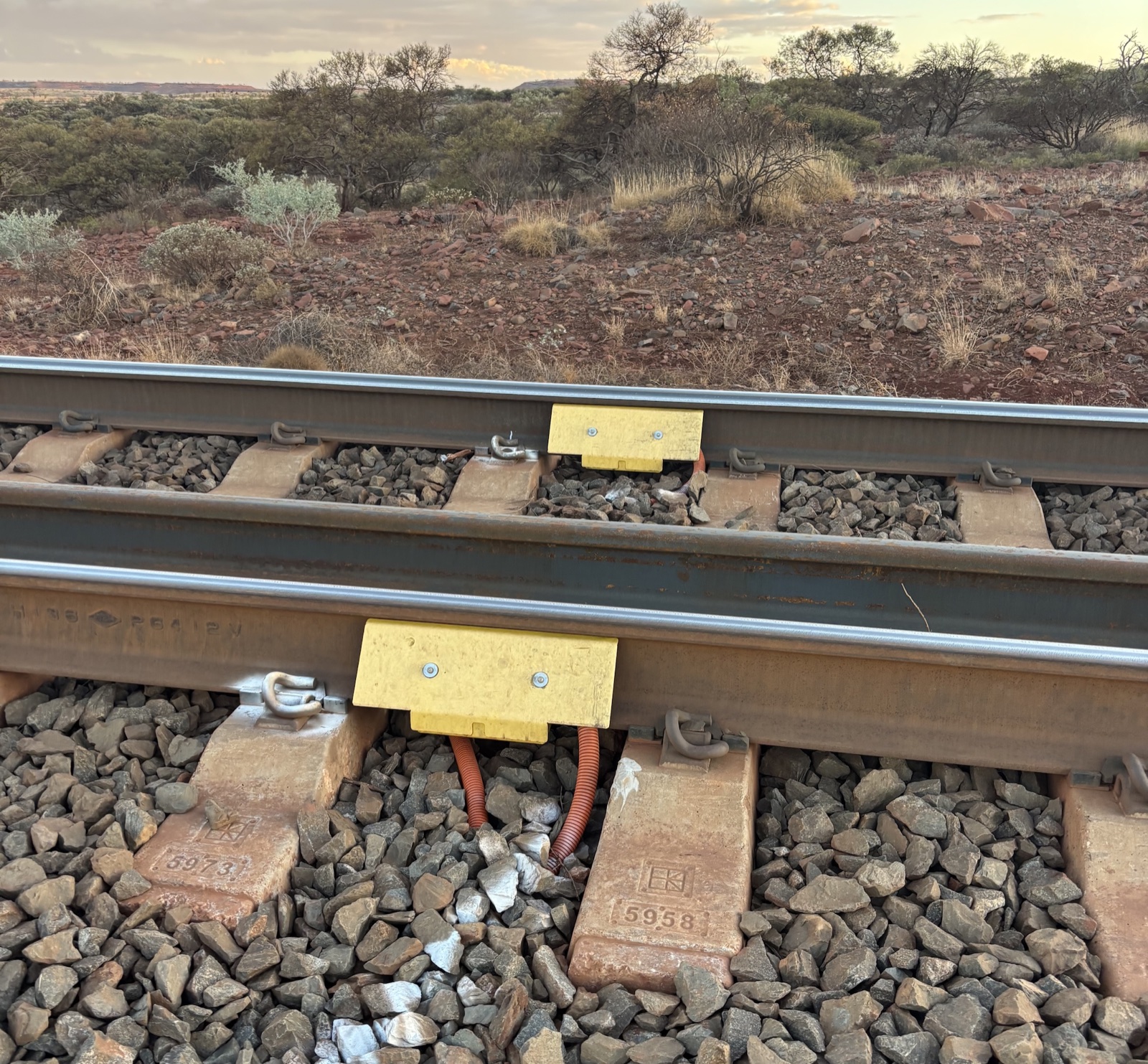
CWRM sensors attach to the existing rail, avoiding rail cutting and sleeper replacement. The compact, modular arrangement reduces installation work and allows components to be removed and reinstalled for maintenance or repositioning.
Replaceable processors, batteries, communications modules and sensing components support maintenance without treating the whole installation as a disposable unit. Track access, installation time and maintenance arrangements are confirmed for each site.
Technical overview
Website-level equipment information
| Parameter | Value |
|---|---|
| Track temperature measurement range | −25 to +75°C |
| Absolute temperature accuracy | Better than 1.5°C |
| Longitudinal force measurement range | ±4,000 kN |
| Force accuracy | ±2% |
| Selectable measurement intervals | 1, 2, 5 or 10 minutes |
| Selectable transmission intervals | 10, 20, 30 or 60 minutes |
| Track Processor battery life | Up to four years for the applicable wireless configuration |
| Ingress protection | IP67 for applicable wireless equipment; IP68 for applicable wired equipment |
These figures describe particular equipment configurations and are not universal site-performance guarantees. The project specification identifies equipment type, power arrangement, environment, measurement method and communications configuration.
Application review
Start with the railway section and the information you need
Tell us which line or locations you need to monitor, the decisions the information should support and any known power, communications or access constraints. If coverage is still being defined, we can work through the requirements with you.